

Struggling to manage your time as a stay-at-home mom doesn’t mean you’re lazy or lack discipline. If you’re anything like me, you’re probably trying to tackle too many things at once — kids, meals, laundry, appointments, emotions, and the constant mental load that never really shuts off.
Most days don’t fall apart because you didn’t try hard enough. They fall apart because there’s no rhythm to lean on, no structure guiding the day, and no wiggle room when something unexpected happens.

For a long time, I thought time management meant staying ahead of the day. I chased productivity, routines, and systems, hoping that if I could just manage my time better, everything would feel easier.
Looking back, I wish I had understood sooner that the goal isn’t to do more — it’s to create enough structure so your days feel livable and your time at home feels meaningful.
This guide isn’t about hustling through motherhood or optimizing every hour. It’s about finding a realistic way to move through your days with less pressure, fewer decisions, and more presence — the kind of time management that supports your life at home instead of competing with it.
Inside this guide, I’ll walk you through simple, real-life ways to create flow in your day, manage the essentials without feeling overwhelmed, and build routines that work for your family — not against it. You don’t need perfection; you just need something steady to come back to.
Quick Start: If Your Days Feel Chaotic, Start Here
If your days at home feel scattered or overwhelming, you don’t need a brand-new system. You just need a few steady anchors to come back to when things feel off.
- Think in flow, not schedules.
Instead of trying to follow a strict timetable, create a loose rhythm to your day. Morning, midday, and evening anchors give your day shape without making it rigid. - Choose a few daily essentials.
Decide on a handful of things that truly need your attention each day, and let the rest wait. Trying to treat everything as urgent is what leaves you feeling overwhelmed by mid-afternoon. - Expect interruptions.
Life at home rarely goes exactly as planned. When you plan with interruptions in mind, small detours don’t completely derail your day.
You don’t need to implement everything at once. Start with one small shift that feels doable, and let your routine grow from there.

Why Time Management Matters for Stay-at-Home Mom Life

Time management matters at home because there are things that need to get done each day. Meals don’t cook themselves, laundry piles up quickly, and children need care, guidance, and attention. Without some kind of structure, even the most important responsibilities can start to feel overwhelming and scattered.
For a long time, I believed that managing my time meant staying ahead of everything. I thought the goal was to keep moving, keep producing, and keep up so nothing ever fell behind.
What I didn’t realize then is that the constant push to stay ahead was stealing something from me. I miss the long, quiet days with my kids — the ones where nothing special happened, but everything felt steady and full.
That’s why time management, at least the way I see it now, isn’t about maximizing your output. It’s about creating enough order in your day so you can actually enjoy being home while you’re in it.
When your day has a simple rhythm, the work of home feels more manageable. You’re able to care for your household, tend to your children, and move through your responsibilities without feeling rushed or constantly behind. Things still get done — just without the pressure to do everything at once.
A realistic approach to time management gives your days shape without squeezing the life out of them. It helps you care for your home and your family while still leaving room for rest, connection, and those ordinary moments you’ll miss later more than any finished to-do list.
Where I’d Tell You to Start

If you were standing in my kitchen and asked me where to start, these are the three things I’d tell you. They aren’t rules or a system to follow perfectly — they’re simple practices that keep our days from unraveling when life feels full.
1. Reset Your Home in the Morning
I’ve learned that how the house feels in the morning has a big impact on how the rest of the day goes. A quick reset — dishes done, counters cleared, laundry started — gives the day a sense of order before everything else begins.
This isn’t about deep cleaning or doing it all before breakfast. It’s about tending to the basics so the mess doesn’t follow you around all day, quietly demanding attention. When the house feels settled, I’m able to think more clearly and move through the day with less friction.
2. Chunk Down Your Day
Instead of trying to plan every hour, I chunk my day into simple parts — morning, midday, and evening. Each part has its own focus, and that alone creates a natural flow without feeling restrictive.
Chunking your day makes it easier to stay present where you are instead of constantly thinking about what’s next. You don’t need to hold the whole day in your head at once; you just need to tend to the part you’re in.
3. Choose Only Three Things to Get Done
Every day, I decide on just three things that truly need my attention. These are the things that, if nothing else happens, will make the day feel successful and complete.
There will always be more that could be done, but trying to carry it all is what leads to feeling overwhelmed. Choosing only three gives your day direction without pressure and helps you end the day knowing you did what mattered most.
10 Practical Ways to Manage Your Time as a Stay-at-Home Mom
Time management at home doesn’t need to be complicated, rigid, or perfectly executed. It just needs to support the work you’re already doing — caring for your household, tending to your children, and moving through your days with purpose instead of pressure.
The tips below aren’t meant to be followed all at once. Think of them as tools you can reach for as your life and seasons change. Some will matter more right now, others later, and that’s okay.
You don’t need to overhaul your days to make progress. Small, thoughtful shifts — the kind that fit real life — are often what make the biggest difference.
1. Create a Daily Flow That Fits Your Home

Having a routine doesn’t mean running your day by the clock. For me, it’s about creating a simple flow — enough structure to keep things moving, without turning the day into a strict schedule that falls apart the moment something unexpected happens.
I think of my day in broad parts: morning, midday, and evening. Mornings are often about getting everyone fed and the house somewhat settled, evenings about slowing down and coming back together. And that middle part of the day — especially when my kids were little — was often about play, reading books, being outside, and just being together.
That kind of daily flow works because it makes room for both responsibility and presence. The necessary work of home still gets done, but it doesn’t crowd out the moments that matter most.
When your days have this kind of rhythm, it’s easier to stay grounded in the season you’re in instead of feeling like you’re always rushing toward the next thing.
2. Chunk Down Your Day (Instead of Time Blocking It)

When most moms hear “time management,” they think of time blocking — assigning specific tasks to specific hours of the day. While that can work in some seasons, it often falls apart at home, especially with kids, because life doesn’t move neatly from one hour to the next.
Chunking your day is similar, but much more forgiving. Instead of planning by the clock, you divide your day into a few broad chunks — usually morning, midday, and evening — and let each one have its own general focus.
Once your day is broken into chunks, you can create simple mini routines inside each one. Mornings might usually include breakfast, a quick home reset, and getting everyone started. Midday often centers around lunch, play, learning, or rest. Evenings tend to follow a familiar rhythm of supper, cleanup, and winding down together. The details change, but the flow stays mostly the same.
This approach works so well at home because it gives your day structure without demanding perfection. You’re not constantly watching the clock or feeling behind when things run long. You know what kind of work fits in each part of the day, which makes it easier to stay grounded and move through your responsibilities without feeling scattered. If you want to see exactly how I chunk down my day and build simple mini routines inside each part, I’ve shared that process step by step in a separate post. It’s meant to give you a clear example you can adapt to your own home and season.
3. Choose Only Three Things to Get Done Each Day

Years ago, I heard someone talk about the idea of “eating your frog” — doing the most important things first instead of carrying them around in your head all day. That simple idea is what led me to this practice.
Each morning, I choose just three things that absolutely need to get done that day. These are the non-negotiables — the things that will make the day feel responsible and complete. If I have the time or opportunity to do more, I do, and that becomes a bonus rather than an expectation.
I remember one day when the kids were playing so nicely together that I had the chance to tackle an extra task I’d been putting off — cleaning out the fridge. It wasn’t on my list, but because my three priorities were already handled, I could say yes to that moment instead of feeling behind or stressed. And honestly, it felt amazing.
This approach changes how the day feels. You’re no longer measuring success by how much you managed to squeeze in, but by whether you tended to what mattered most. Some days your three things are practical — meals, laundry, appointments. Other days they’re relational — being present with your kids, getting outside together, keeping the day steady. Both count, and both are part of the real work of being home.
4. Share the Work of the Home
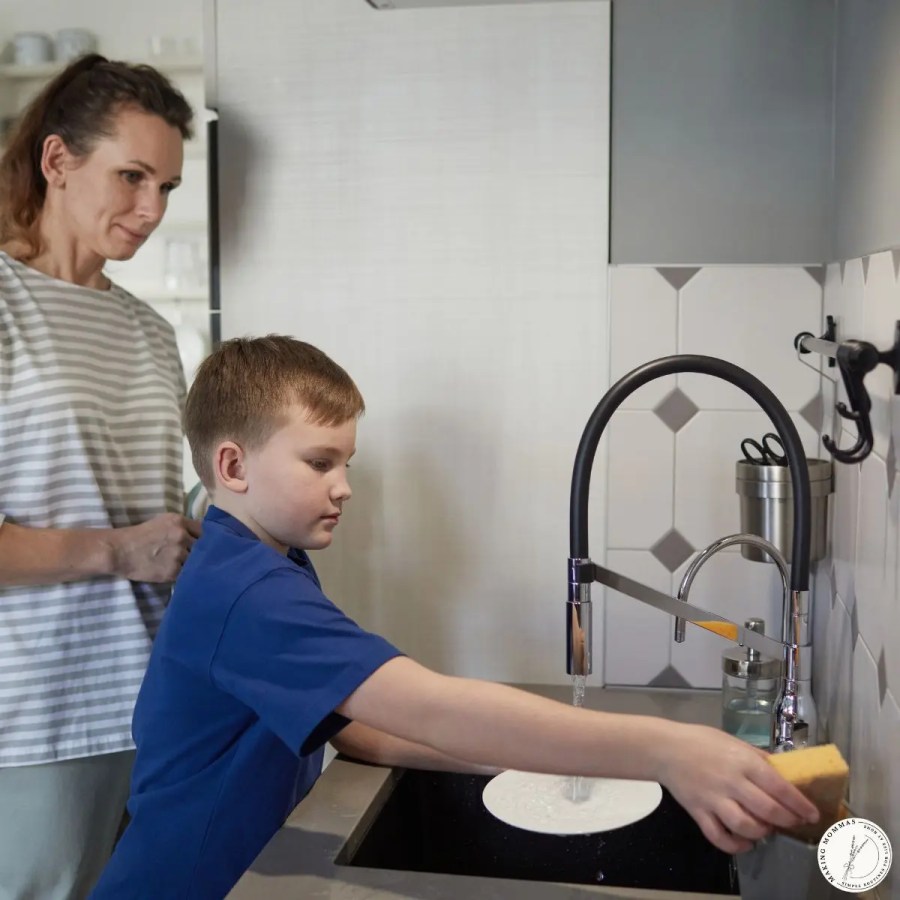
One of the biggest lessons I had to learn as a stay-at-home mom is that staying home does not mean carrying the entire household on your shoulders. The work of home belongs to everyone who lives there.
When kids are little, it’s natural for more of the responsibility to fall on you. But as they grow, involving them in the everyday work of the house isn’t just helpful — it’s important. Chores teach responsibility, contribution, and the understanding that a home runs best when everyone pitches in.
This applies to husbands, too. In our house, we’ve always had “his” and “hers” chores, but that didn’t mean everything else was mine by default. When the kids were younger, my husband took on more of the daily tasks, and as the boys got older, they gradually stepped into those responsibilities.
Letting go of doing it all doesn’t mean you’re failing at being a stay-at-home mom. It means you’re building a home where everyone understands their role and contributes to the life you’re creating together. That shared effort frees up time and energy for what matters most — your family.
5. Plan Meals in a Way That Fits Your Values and Season
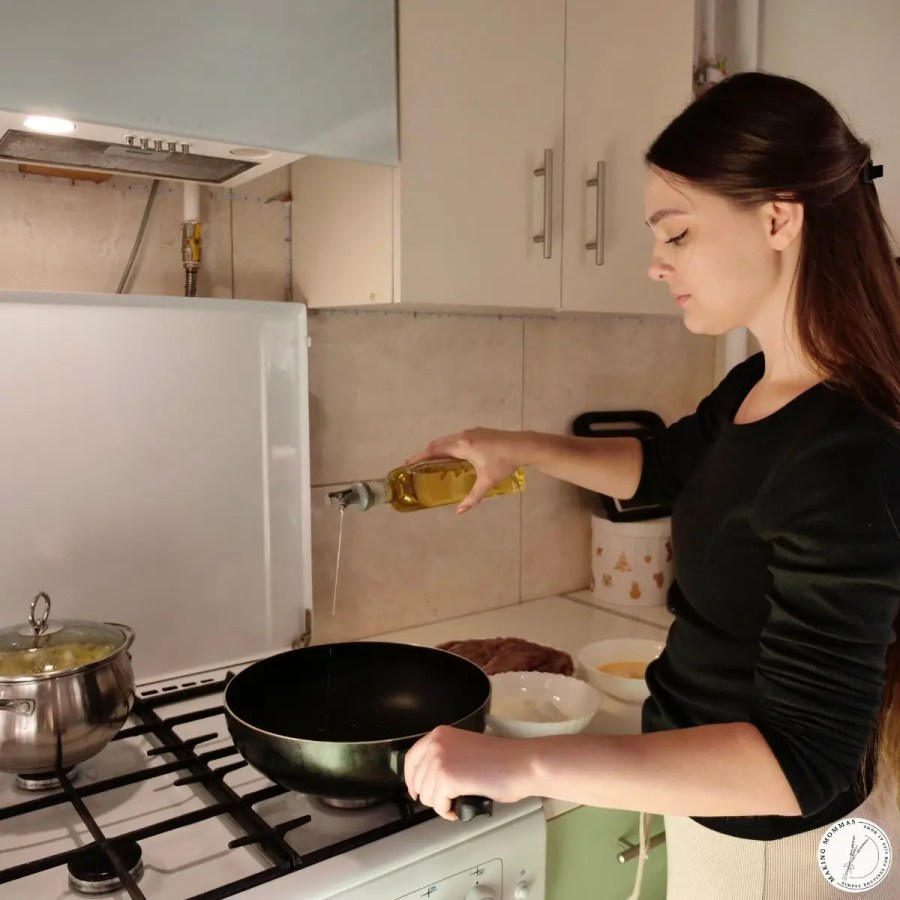
Meal planning can make or break how your days at home feel. When meals are decided ahead of time, there’s less stress, fewer last-minute scrambles, and more mental space for everything else.
I’ve come to believe there isn’t just one “right” way to plan meals as a stay-at-home mom. There are different approaches, and the one that works best depends on your values, your season of life, and what you want your time in the kitchen to look like.
Some moms prefer a quicker approach — relying on simple meals, crockpots, batch cooking, and freezer-friendly options to keep things moving. This can be a great fit in busy seasons, especially when time and energy are limited.
Others, like me, enjoy cooking from scratch and value the rhythm of time spent in the kitchen and sitting down to home-cooked meals. This approach often takes longer, but for families who prioritize traditional meals and time at home, it can be just as supportive in a different way.
The goal isn’t to meal plan perfectly — it’s to choose an approach that serves your family instead of stressing you out. Whether you lean toward quick and simple or from-scratch cooking, having a plan that fits your life will save time, reduce mental load, and make your days feel more settled.
6. Be Mindful of What Pulls Your Attention Away

At home, distractions don’t usually look like emails or meetings. They look like phones, constant noise, unfinished tasks, and the feeling that your attention is being pulled in ten directions at once.
This isn’t about eliminating distractions altogether — that’s not realistic with kids at home. It’s about noticing what quietly drains your energy or keeps you from being present in the moments you actually care about.
For me, that often means being intentional with my phone. One small change that helped more than I expected was turning off notifications for everything except calls and texts. When I’m not constantly seeing little alerts pop up, I’m far less tempted to check my phone out of habit.
It also helps to finish one small task before jumping to the next, so my attention isn’t constantly fragmented. When your focus is scattered, even simple days feel exhausting.
But when you’re more present — whether that’s during playtime, mealtime, or working around the house — the day feels calmer and more grounded, even if the to-do list looks the same.
7. Set Realistic Expectations for Your Days

This is one I still struggle with, even now. I have a habit of making my to-do list longer than there are hours in the day, and then wondering why I feel behind by mid-afternoon. When your expectations don’t match the reality of life at home, even productive days can feel like failures.
It took me a long time to realize that many of my frustrations weren’t coming from what wasn’t getting done, but from what I expected should be getting done. Once I started setting more realistic expectations for my days, everything felt lighter.
Some days are meant for cooking, cleaning, and catching up. Other days are meant for slower moments — playing, reading, being outside, or simply keeping everyone fed and safe. Both kinds of days matter, and neither means you’re falling behind.
When you plan your days around what’s actually possible in your current season, you give yourself room to adjust without guilt. Life at home is unpredictable, and flexibility isn’t a failure — it’s part of the work.
8. Take Care of Yourself Without Turning It Into Another Burden

For a long time, the only version of “self-care” I believed in was exercise. Running, specifically. And instead of helping, it became another source of guilt — I felt guilty when I made time to run, and I felt guilty when I didn’t.
Outside of that, I never put self-care on my to-do list. There were no routines for it, no plans around it, and no space in my day that felt available for it. Turning it into a task on my to-do list would just make already full days feel heavier.
What helped was letting go of the idea that I needed to practice “self-care” at all. Instead, I started thinking about what it meant to take care of myself in small, ordinary ways — ways that actually fit into life at home. Sometimes that meant stepping outside for a few quiet minutes, enjoying a cup of coffee without rushing, or choosing rest instead of pushing through. Other times it meant doing something practical that made the rest of the day feel easier.
I don’t believe taking care of yourself is about indulgence or escape. I believe it’s about being able to show up well for the life you’re living — not because you’ve done something for yourself, but because you’re no longer running on empty.
9. Stay Flexible When the Day Changes

No matter how thoughtfully you plan, life at home will always bring interruptions. Kids get sick, plans shift, emotions run high, and days don’t always unfold the way you expected them to.
For a long time, I felt frustrated when a plan fell apart. It felt like failure, even when the reason was completely outside my control. Over time, I learned that flexibility isn’t giving up on structure — it’s knowing when to loosen your grip and adapt without carrying guilt.
Some days, flexibility means letting go of what you thought you’d accomplish and focusing on what the day actually needs. Other days, it means adjusting expectations and trusting that tending to your family is the work, even when it doesn’t look productive on paper.
A flexible approach to time management allows your routines to support your life instead of fighting against it. When you can adapt without self-criticism, the day feels calmer, and you’re able to move on without beating yourself up.
10. Let Your Routines Change as Your Family Changes

Life at home doesn’t stay the same, and your routines won’t either. As kids grow and needs shift, the things that once worked really well can stop fitting — and that doesn’t mean you did anything wrong.
For a long time, the way we started our mornings was snuggling together in the rocking chair. It was the first thing we did every day, and it was exactly what that season needed. But eventually, the kids outgrew it. When that changed, it naturally opened up space for something new, and that’s when resetting my house in the morning became the first thing I did instead.
That’s why it helps to occasionally step back and pay attention to what’s working and what isn’t anymore. Not to fix everything or overhaul your days, but simply to notice when something that once served your family no longer does. Kids grow, rhythms shift, and your days will look different as time goes on.
How to Stay Consistent Without Feeling Rigid

Consistency at home doesn’t come from doing the same thing every day. It comes from having a few steady rhythms you return to, even when days don’t go as planned.
What helped me most was letting go of the idea that consistency meant perfection. Some days flowed beautifully. Other days barely held together. But because the overall structure stayed familiar — the way we started our mornings, moved through the day, and came back together in the evening — it was easier to pick things back up the next day without feeling like I had to start over.
Consistency also comes from keeping things simple. When your routines are realistic, they’re easier to maintain over time. You don’t need a complicated system or a perfectly planned day. You just need a few anchors that fit your life and adjust as your family changes.
Staying consistent isn’t about holding tight to a routine no matter what. It’s about knowing what matters most in your home and returning to it again and again. Over time, that steadiness creates days that feel calmer, more predictable, and easier to live inside.
Time Management FAQs for Stay-at-Home Moms
If you’re reading this and nodding along, you may still have a few questions — especially if your days feel full, unpredictable, or messy in ways no routine can completely fix. That’s part of life at home. These answers are here to offer clarity and reassurance, not more rules.
What if my days still feel chaotic even with a routine?
Some amount of messiness is part of being a stay-at-home mom. Kids, homes, and real life don’t move neatly from one thing to the next, and fighting that can be more exhausting than accepting it. A routine isn’t meant to eliminate chaos — it’s meant to help you move through it with less frustration and more steadiness.
Do I need a schedule for this to work?
No. This approach is built around flow, not strict schedules. You don’t need to follow the clock for your days to feel steady — you just need a general sense of how your mornings, middays, and evenings usually unfold.
What if I don’t get my three priorities done?
That happens, and it doesn’t mean the day was a failure. The idea of choosing three priorities is meant to bring clarity, not pressure. If three feels like too much, choosing one or two is more than enough. The goal is direction, not completion.
How does this work with babies or very young kids?
This way of managing your time was designed for life with little kids. Yes, days with infants and toddlers are less predictable, but the overall structure still works. The mini routines may change often, but the overall flow of the day can stay the same. I used this approach from infancy on, and I still use it now — it simply looks different as seasons change.
What if what works now stops working later?
That’s normal. As your kids grow, the details of your routines will change, but the overall flow usually stays the same because it’s grounded in what matters most to your family. When something stops fitting, it’s often an invitation to adjust the routine — not abandon the structure altogether.
At the End of the Day…

At the end of the day, time management at home isn’t about squeezing more out of yourself or trying to make every day run smoothly. It’s about creating enough structure to care for your home and your family without losing yourself — and without missing the life that’s happening right in front of you.
Some days will feel productive, and others won’t. Some days will go according to plan, and others will ask something entirely different of you. None of that means you’re doing it wrong. It just means you’re living a real life at home.
What matters most isn’t how much you crossed off a list, but how you moved through the day — the security you created, the care you gave, and the moments you were present for. Those are the things that last far longer than a finished to-do list.
You don’t need perfect routines or flawless days. You just need a way of living that supports your family, honors the season you’re in, and allows you to end the day knowing you did what mattered most.
Want help putting this into practice?
If you’d like a simple way to shape your days using the flow we talked about here, I’ve created a collection of free stay-at-home mom daily schedules you can download inside my printable hub.
You’ll find a variety of options, including:
- flexible daily flows instead of rigid schedules
- space for choosing just three priorities
- different layouts for different seasons of home life
- meal planners and other simple tools that support your day
There’s no email required, and you’re free to use whatever fits your family right now.
👉 Browse the free daily schedule printables here
If you’d rather customize a schedule to fit your exact routines, there’s also a Canva-editable version available inside my premium hub.
More Posts You May Enjoy
If this guide resonated with you, these posts build on the same ideas — creating flow at home, reducing mental load, and managing your days in a way that fits real life with kids.
How to Create a Stay-at-Home Mom Routine You Can Actually Stick To
A realistic look at building routines that grow with your family instead of fighting your season.
How I Chunk Down My Day as a Stay-at-Home Mom
A closer look at breaking the day into manageable parts and creating simple routines inside each one.
Schedules vs. Routines: What Actually Works at Home
Why strict schedules often fall apart — and how routines create more freedom instead.
How to Plan Your Days Around What Matters Most
A values-first approach to daily life at home, especially when everything feels important.
Frugal Meal Planning That Works for Real Life
How to plan meals in a way that supports your family, your budget, and your time at home.


